Finishing
There are many post-print processes that enhance appearance, function, and durability, such as cutting, folding, binding, lamination, foil stamping, varnishing, and die cutting just to name a few. These value-added steps turn printed sheets into finished products such as magazines, brochures, signage, or custom packaging.
Common Finishing Operations Include:
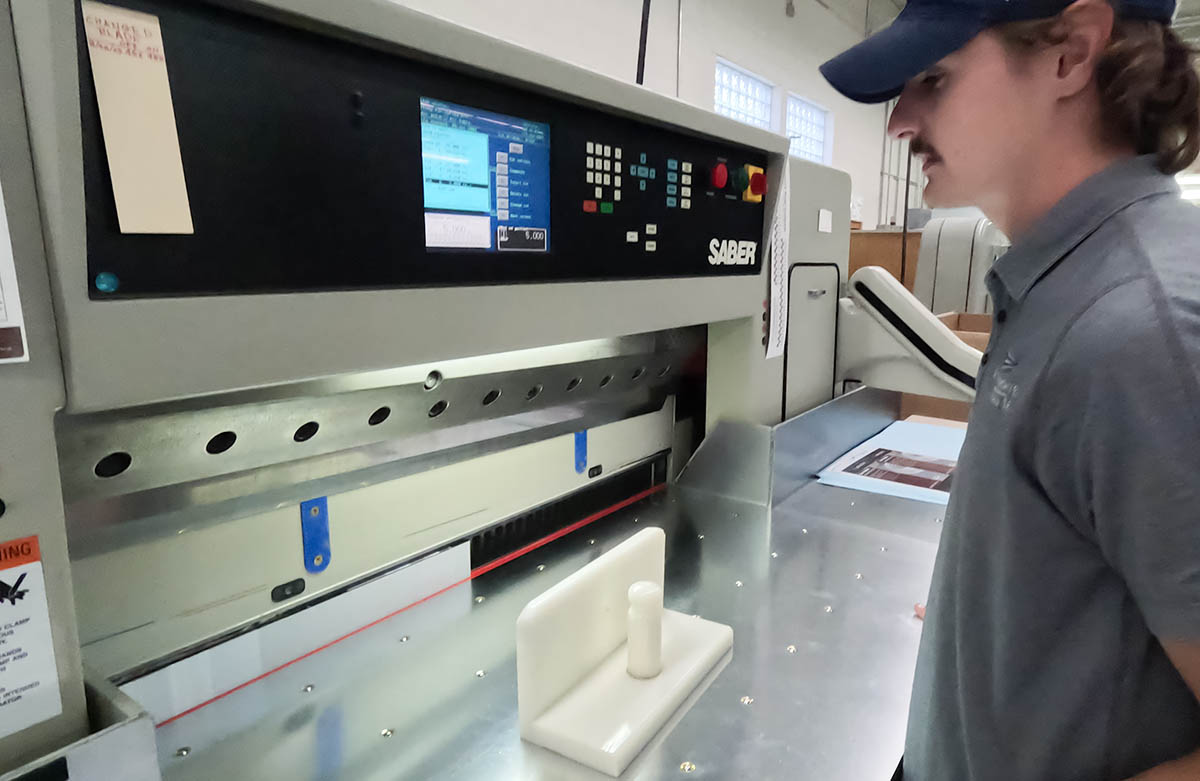
Cutting & Trimming
Cutting or trimming printed sheets to precise dimensions for the finished product.
Folding
Folding printed materials in styles like bi-fold, tri-fold, half fold, letter fold, gate fold, or accordion fold to prepare brochures, pamphlets, or other documents.
Binding
Binding and fastening multiple printed pages to produce books, magazines, or reports.
Lamination
A protective plastic film that is applied to the printed material to increase durability, guard against damage, and elevate appearance with gloss, matte, Soft Touch, or silk finishes.
Foil Stamping
Metallic foil stamping uses heat and pressure to apply gold, silver, copper, or other foils, creating a reflective, high-end accent.
Varnishing
A clear coating that is applied to the printed surface to enhance durability and adjust the level of shine.
Spot UV
Applying a UV-cured liquid coating to selected design elements to produce a glossy, raised finish that draws attention to key details.
Die Cutting
Die cutting is a post-print finishing process that uses a custom-shaped steel blade (die) to cut, score, or perforate printed materials into specific shapes — similar to a cookie cutter. It enables precise cuts for custom shapes, logos, and intricate designs, serving both functional needs such as folds for packaging and decorative purposes to help products stand out.